

Sake Labels
Demystifying Sake Labels
Purchasing a bottle of sake can feel daunting. Its as if you need to be proficient in the Japanese language simply to buy a bottle in your local retail shop.
Have no fear, we are here to ease any anxiety and help you decipher all you see on a sake label. We will help you weed out the key information you will need to make an informed decision about your purchase.
*Sake imported into the US must have an English language back label. So an easy way to obtain basic information from a bottle is to just turn it around?
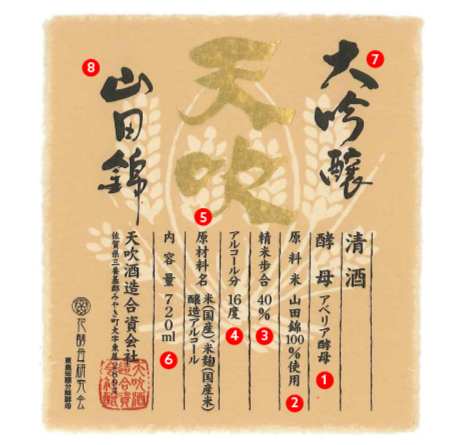
Yeast
Yamada Nishiki Rice 100%
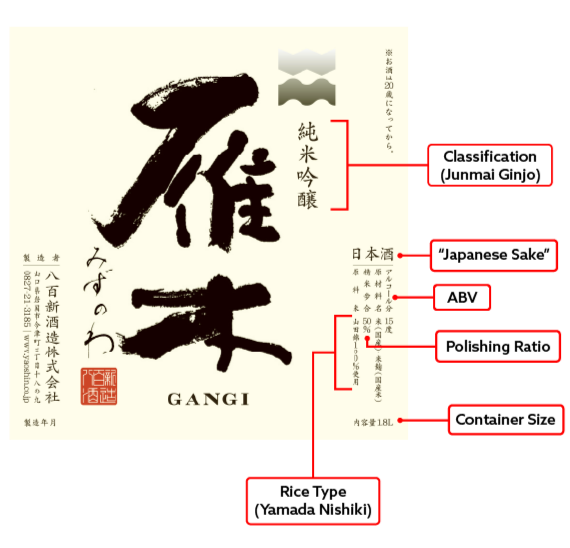
Rice Polishing Ratio
ABV
Ingredients
Container Size
Daiginjo
Yamada Nishiki
Things to Look For
In addition to the labels on a sake bottle, you may notice a few that have additional stickers or seals to provide even more information about the contents of the bottle.
Nama sake sticker indicates that the sake is not pasteurized twice and therefore needs to be refrigerated.
There are various Geographical Indication stickers that may be affixed to the bottle. They may give you insight into the style, rice type, yeast, and other aspects depending on the region’s GI specifications.
Deciphering a sake label does not require mastering the entire Japanese language, but recognizing a few key kanji (Chinese characters) can make all the difference. With just a little knowledge, you will be able to navigate the store shelves with confidence, quickly identifying the style, ingredients, and brewing techniques that match your preferences.
Kanji to Know
日本 (nihon) - Japan
酒 (sake/shu) - alcohol or sake
大吟醸 (daiginjo) - sake made with rice polished down to 50% or less remaining
吟醸 (ginjo) - sake made with rice polished down to 60% or less remaining
純米 (junmai) - “pure rice”, sake made with only water, rice, yeast, and koji
本醸造酒 (honjozo) - sake with added distilled alcohol
特別 (tokubetsu) - “special”
生酒 (namasake) - unpasteurized sake
生酛 (kimoto) - Sake made with a traditional labor intensive yamaoroshi process for the fermentation starter. It is created by way of natural elements and without the aid of quicker acting, commercially available lactic acid.
原酒 (genshu) - Undiluted sake, no water is added after production. May reach natural alcohol content up to 20%. Generally, powerful and rich.
山田錦 (yamadanishiki) - The most widely produced sake specific rice, known as the king of sake rice.