

Sake SMV
What is SMV?
Shopping for sake can feel overwhelming, especially with all the numbers and percentages - ABV, rice polishing ratio, and even SMV? How do you know what to expect if you have never tasted it before?
If you are lucky, the store might have shelf talkers with tasting notes or pairing suggestions. Occasionally, you will spot something called the “SMV” on a back label or display. But what exactly is SMV, and can it help you choose the right sake? You may come across something like this:
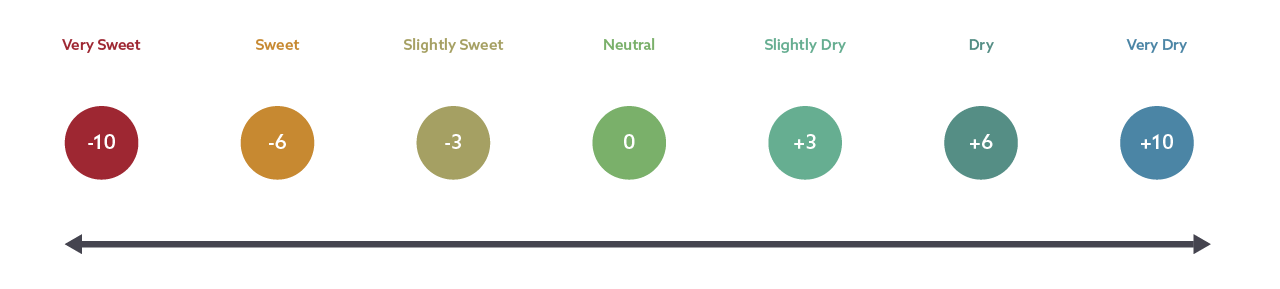
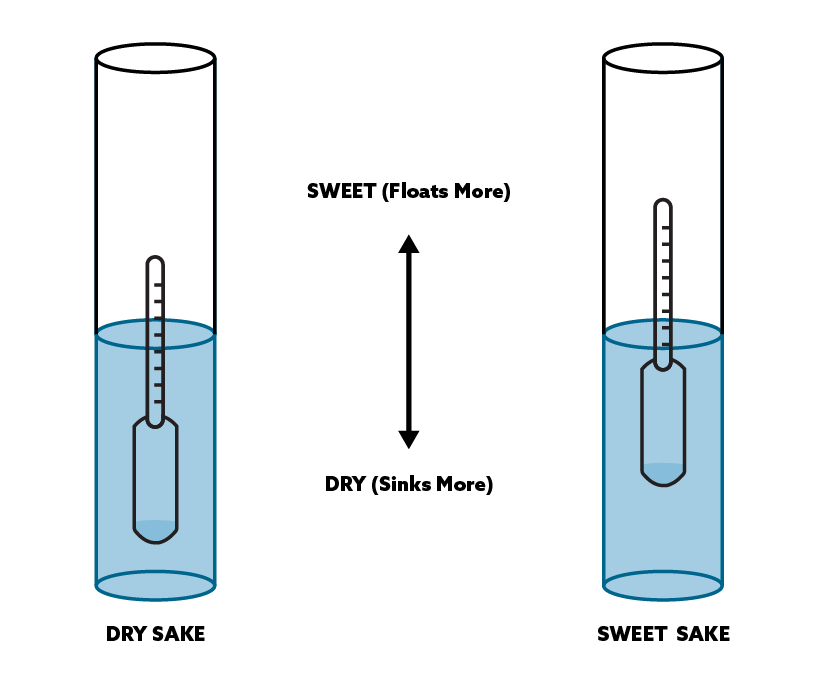
The Sake Meter Value (SMV) measures sake’s density relative to water and serves as a general guide to its dryness or sweetness. A higher SMV technically indicated a drier sake, while a lower or negative SMV suggests a sweeter sake. The average SMV hovers around +3, but perception can vary based on other factors like acidity and sugar content. Sake with SMV’s between +3 to -3 can be difficult to make assumptions about the taste.
While SMV provides a useful reference, it is not the sole determinant of how sweet or dry the sake will be. Two sakes with the same SMV can taste noticeably different due to variations in their acidity and composition. However, SMV is most helpful at the extremes - offering a clearer expectation when dealing with ultra-dry (+10 ohkarakuchi) or richly sweet sakes (-30 kijoshu).