

Sake Temperature
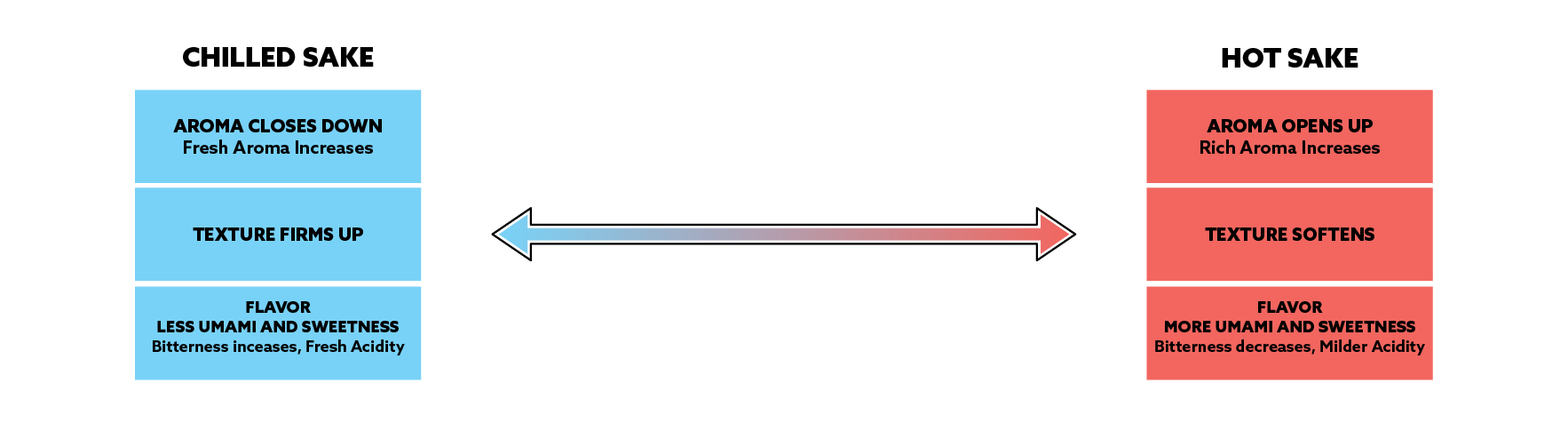
The temperature at which you serve sake can significantly impact its aroma, texture, and flavor. It is helpful to understand how chilling and warming changes how a sake is experienced.
Chilling Sake
Offers a refreshing aromatic character, a leanr texture, and a heightened bitterness that brings out its unique flavors while making it more challenging to detect umami and sweetness.
Warming Sake
Unlocks complex aroma components, allowing for a more pronounced expression of the ingredients from its fermentation. It may also produce a mellower texture and a drier mouthfeel. Warming sake can also restrain refreshing aromas and emphasizes sweetness and acidity. To learn out to heat sake properly, check out our education page.
Guidelines for Recommended Serving Temperatures
Fragrant Sake
Junmai Daiginjo / Junmai Ginjo / Daiginjo / Ginjo
Suggested temperatures: ~50° F or 50–59° F
When chilled, this type of sake has a refreshing taste and smooth texture. Careful not to overchill as the beautiful fragrant aromas may be reduced and the mild taste will dissipate.
Clean and Smooth Sake
Namazake / Nama Chozo / Nama Zume
Suggested temperature: 41–50° F
These type of sake are best served very chilled. The clean simple aromas are not undermined by the lower temperature and smooth texture is highlighted when chilled.
Aged Sake
Koshu
Suggested temperatures: 59–77° F or ~95° F
Aged sake ranges from light to heavy in type, so it can be enjoyed at different temperatures, depending on its heaviness and your preferences. It is best to warm a heavy sake but it should not be served too hot.
Rich Sake
Junmai / Honjozo
Suggested temperatures: 59–68° F or 104–122° F
This type of sake is best at room temperature or warmed. Chilling may suppress the its rich and full-bodied flavors. If the sake is a dry type, then its sharpness and freshness can be best enjoyed at higher temperatures (113-122° F). A smooth type is best served at around 104° F.