

Shochu Serviceware
Just like with sake, shochu drinking vessels (shuki) are an important consideration when enjoying the traditional distilled beverage. Today, shochu is mostly typically served in glasses or ceramic cups.
There are also a variety of traditional vessels distinct to it production region. There are crucial variable that should be considered in selecting the appropriate glassware. Glassware shapes and sizes can significantly impact the drinking experience, affecting the appearance, aroma, taste, and texture of the drink.

Maximum volume capacity
Distance between the liquid surface and the glass lip or rim
Rim diameter
Inflow of air into the shuki when tilted.
Oxidation rate and aroma concentration.
Shuki position when shochu first make contact with the tongue.
There are crucial variable that should be considered in selecting the appropriate glassware. Glassware shapes and sizes can significantly impact the drinking experience, affecting the appearance, aroma, taste, and texture of the drink.
Traditional Shochu Vessels - Kyushu
Kagoshima Prefecture
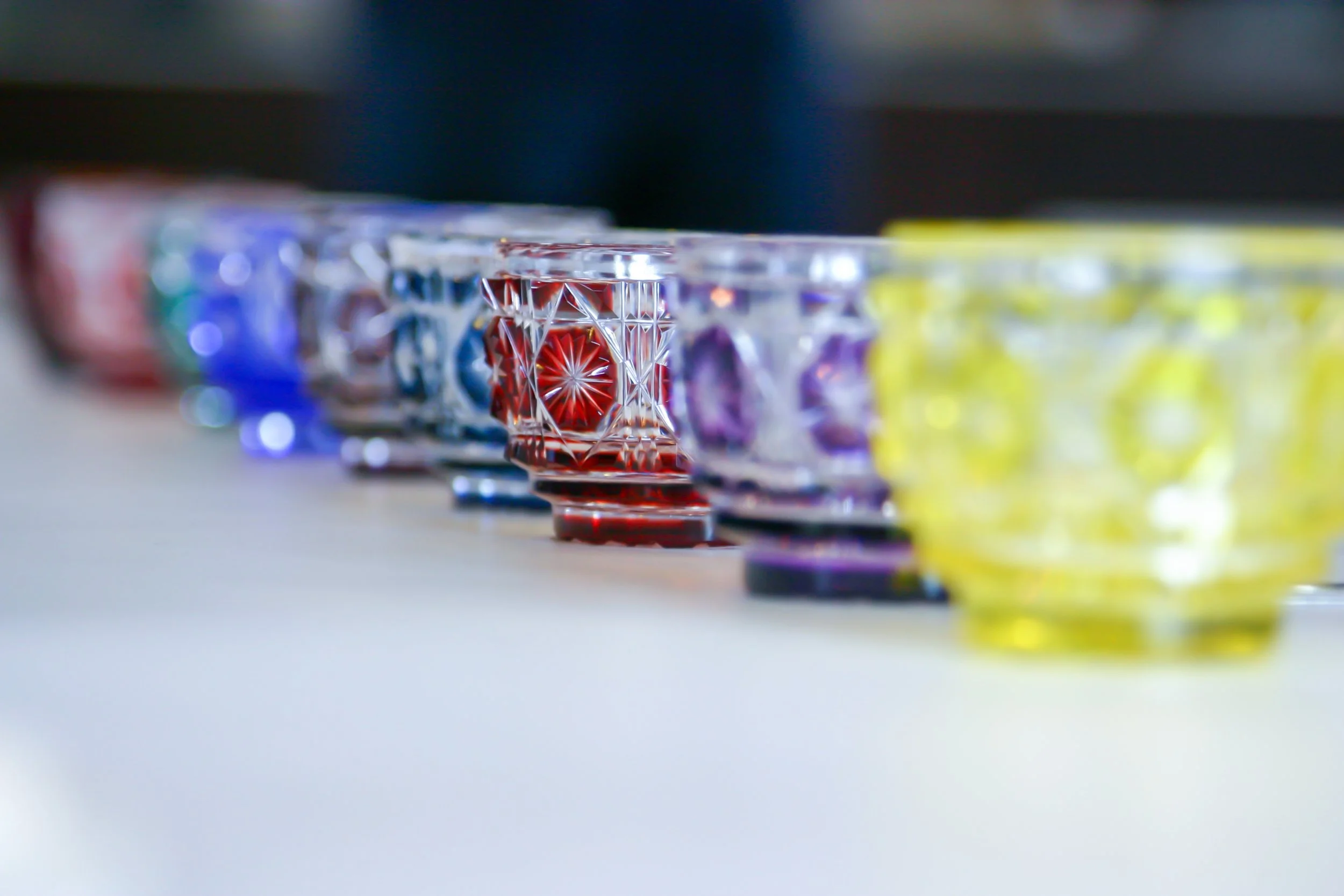
Japanese cut glass characterized by its layered, vibrant colored glass. The technique was created in the southern Kagoshima prefecture by Lord Shimazu Nariakira in the 19th century, blending European cutting techniques with Chinese overlaying methods. Drinking shochu from this glass elevates the drinking experience and connection with the roots of the spirit.
Satsuma Kiriko
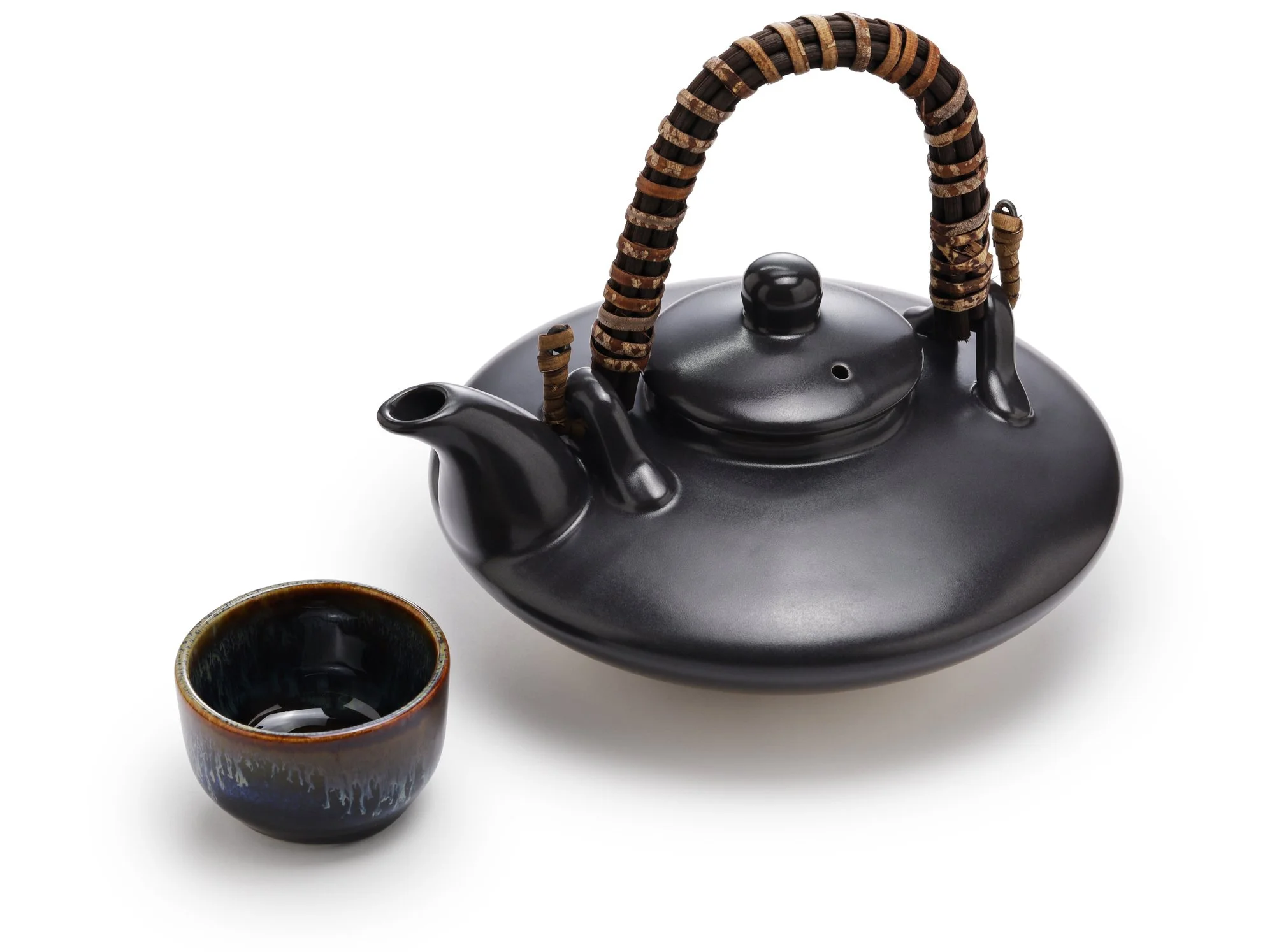
A ceramic kettle used to serves shochu warm. Heating the shochu in a choka mellows and results in a smooth taste, making it a popular way to consume the beverage during colder months.
Choka
Kumamoto Prefecture
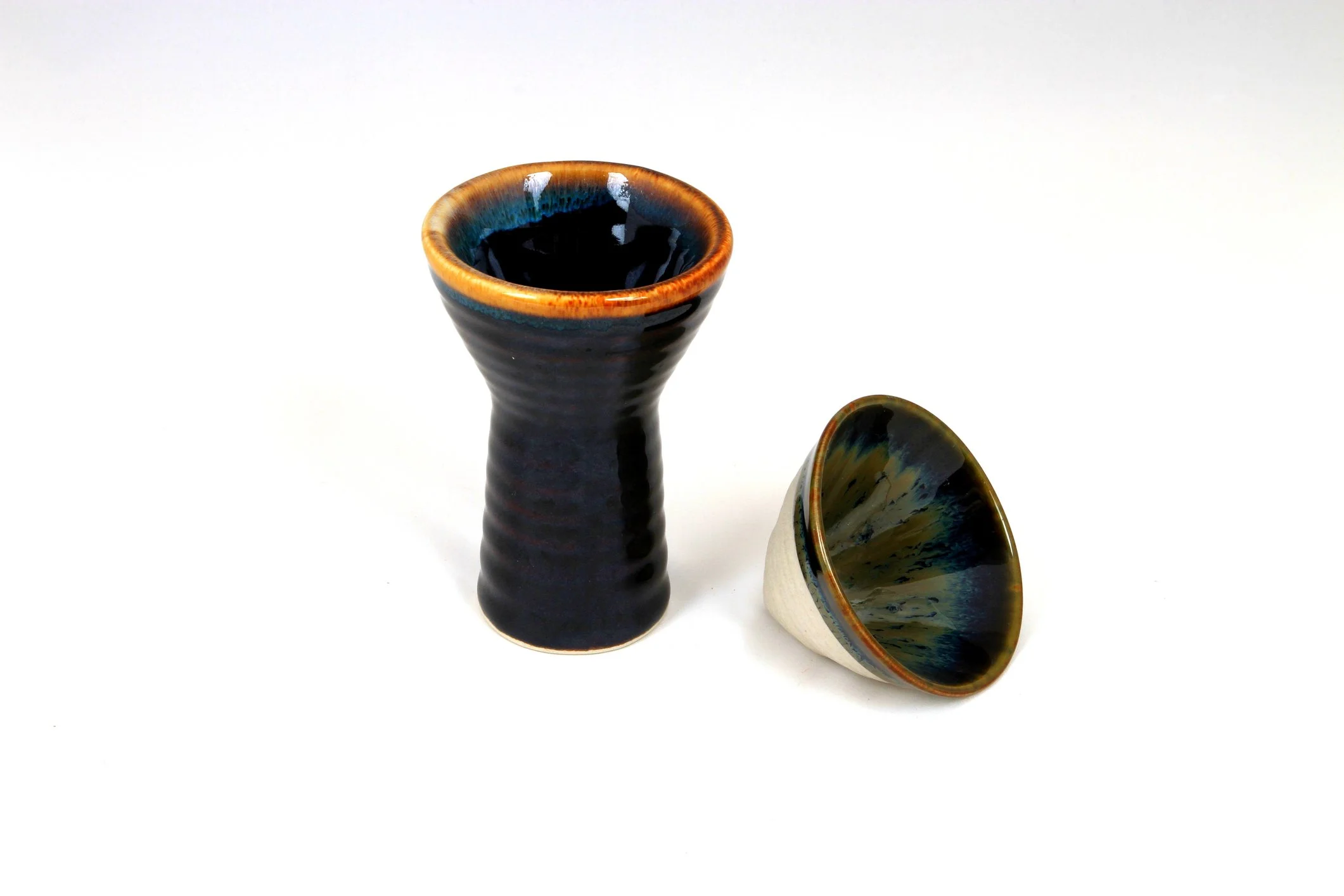
A traditional conical shaped drinking cup. Its shape prevents it from being set down on a table, encouraging the drinker to consume the contents in one gulp.
Sorakyu
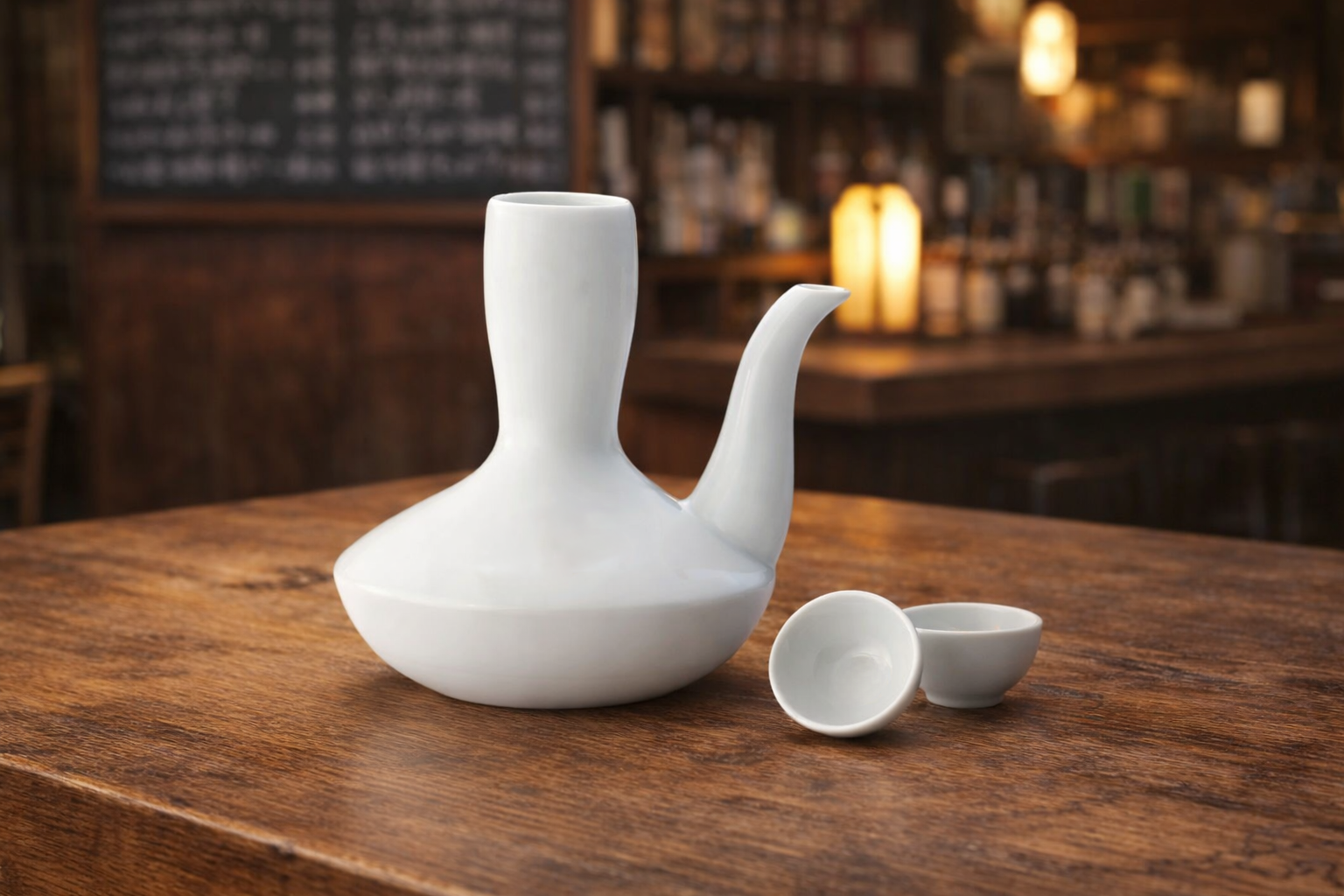
Gara refers to the porcelain pitcher and choku the small cup. Traditionally, shochu from the Kumamoto region was higher in ABV (around 35-40%) and locals tend to prefer their shochu warmed. The shochu is heated in the gara over an open flame.
Gara and Choku
Okinawa Prefecture
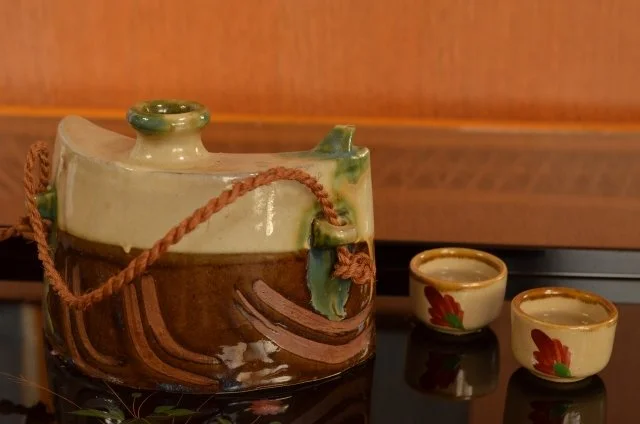
A traditional earthenware curved flask that fits snugly along the carrier’s hip. It was primarily used to carry Awamori. The two loops on the side allow it to be secured with a carrying cord.
Dachibin
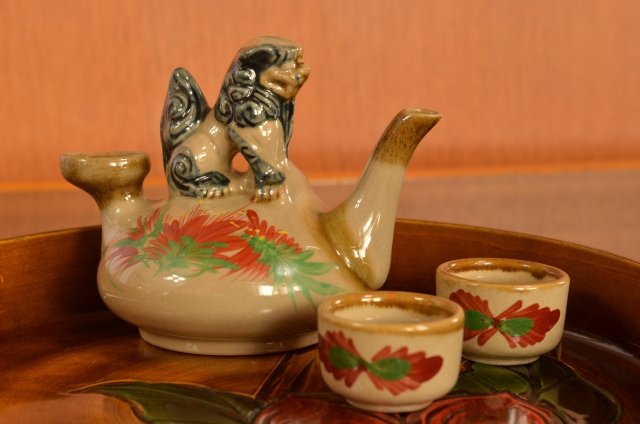
Traditional Awamori serving vessel. The small earthenware vessel contains a clay marble inside that creates a “kara-kara” sound when empty.
Karakara
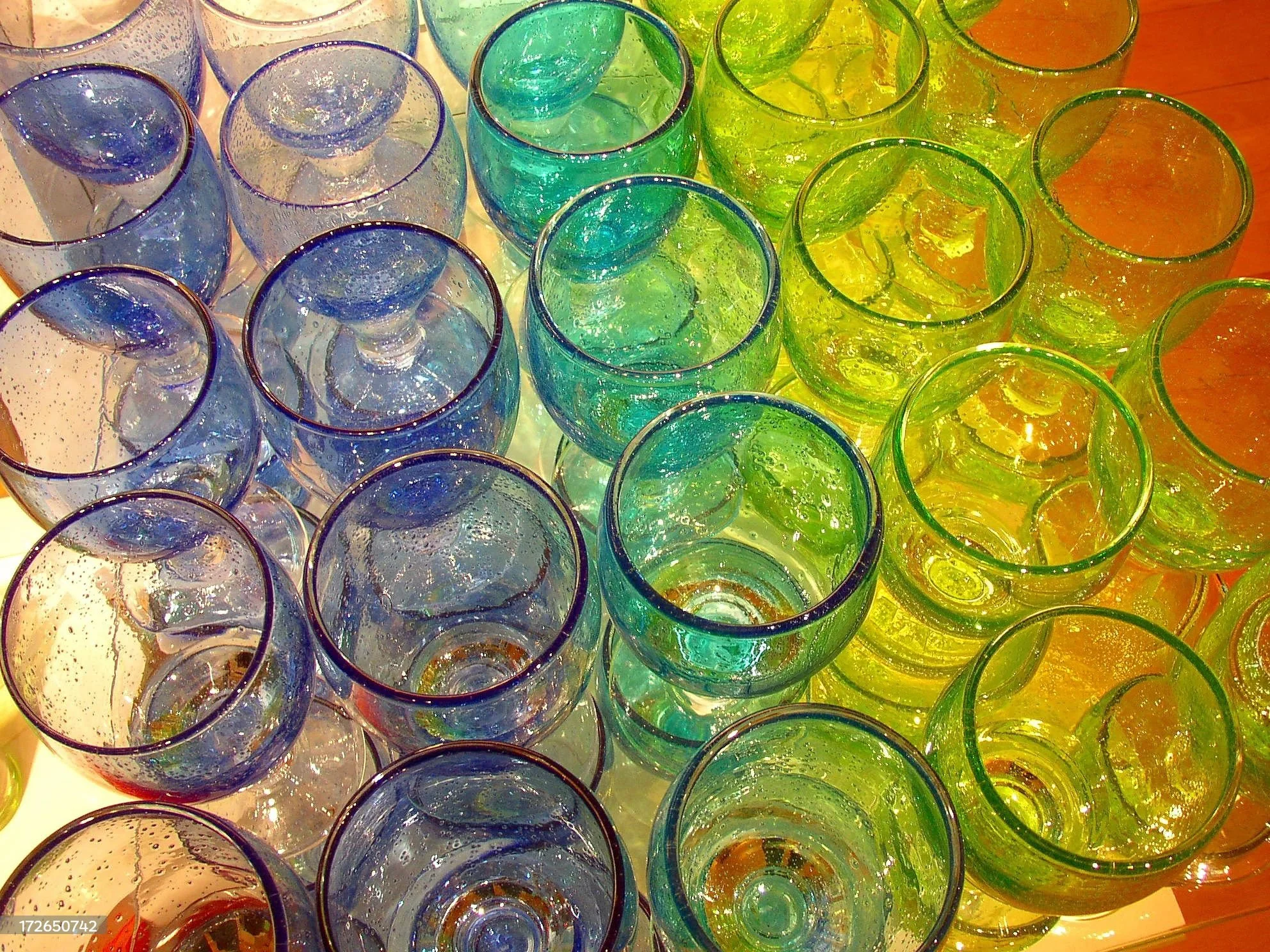
Ryukyu glassware is distinctive for its bright tropical hues, thick form and air bubbles. This type of glass was a product of the post-WWII demand created by the military base in Okinawa and the post-war shortage of resources. Recycled bottles were used to make the glasses and the residue of the labels created these now signature bubbles.
Ryukyu Glass
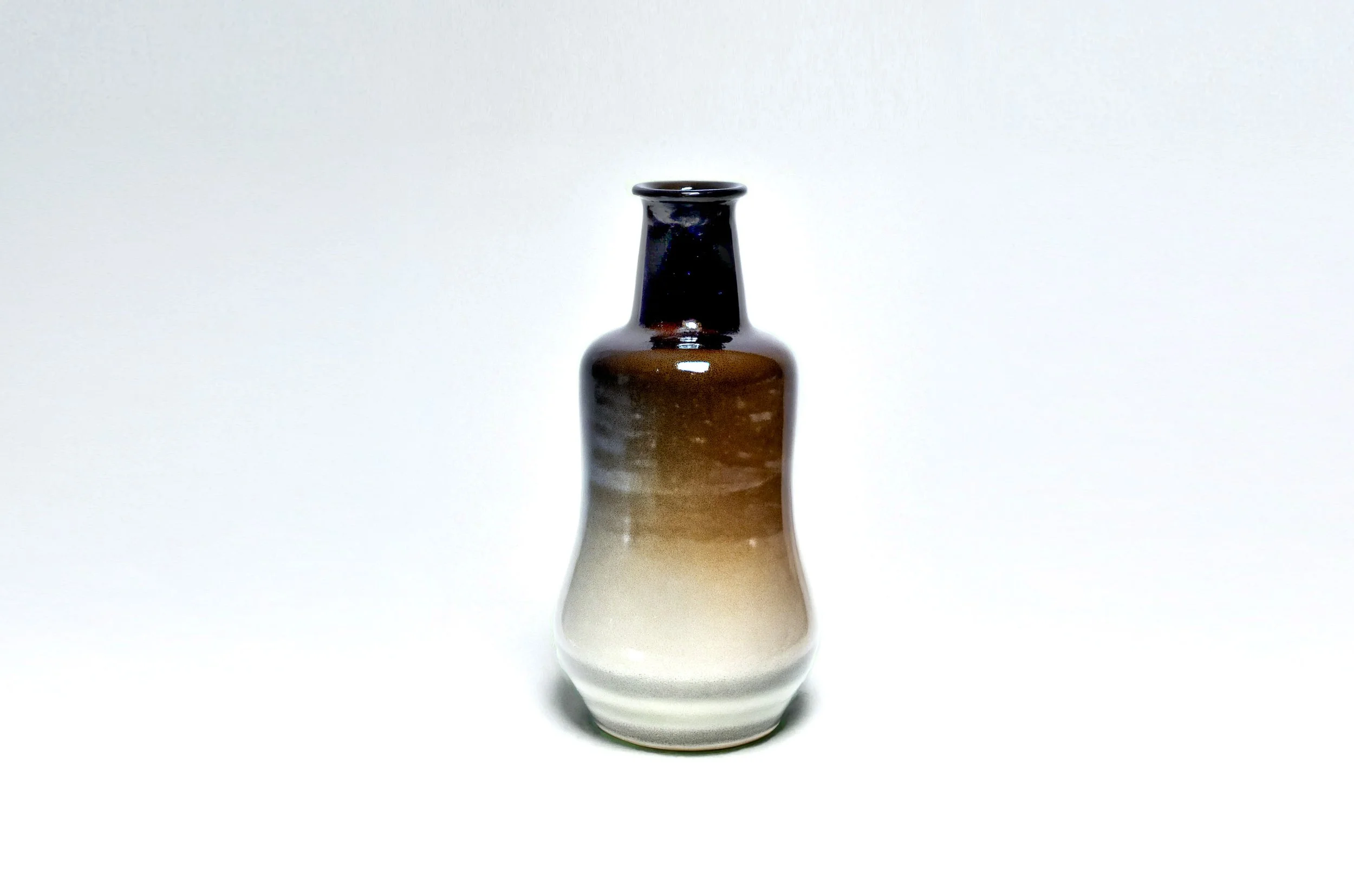
A large, gourd-shaped bottle used to transport Awamori used for ceremonial purposes. They are often glazed in unique red or green colors, representing a significant part of Okinawan culture and are considered a symbol of tradition